
Big news, I’m alive and blogging. I thought I had this working and blogging thing worked out, but I didn’t. Midterms through me off. Today I gave a makeup midterm so didn’t have time to write. It’s now 7:04 and I’m not exhausted, and I already watched Last Week Tonight so I will write.
I had a busy weekend, on Friday I saw Black Panther: Wakanda Forever, on Saturday Leopoldstadt, and yesterday I went to the Knick game. I did find the time to not just complete this week’s Gord’s Gold but to program next week’s. I did this while combatting a depressive episode. You are lucky that I didn’t get to write earlier, or I’d have written about that. I’m still reacting to the depression trigger, but I have a handle on it now. I’m keeping it safely locked up in the sock draw of my mind.
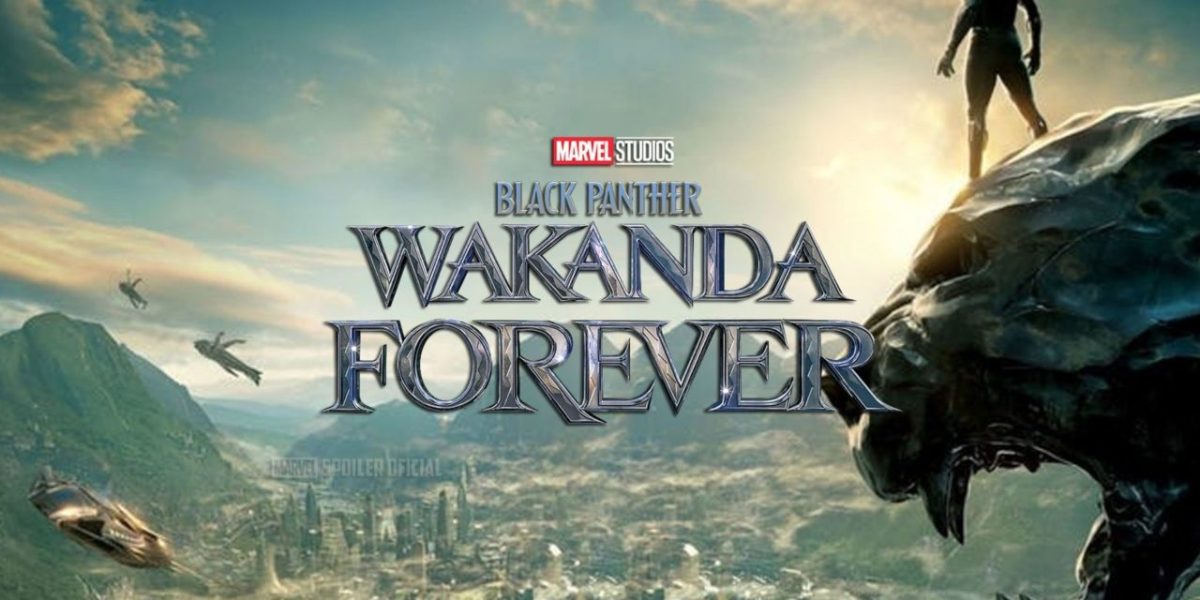
Instead of picking at my emotional scabs I’m going to give you insight on how I watch movies by discussing Wakanda Forever. Everyone I know loved the film, I didn’t. That doesn’t mean I’m telling you to not see it. Even I don’t think it was bad, I think it was problematic. More importantly I have learned that hardly anyone else is bothered by these sorts of problems. What I have finally realized is that I don’t experience movies and TV the way most people do. What I have to say will tell you far more about me than the film.
Some of my issues go back to the original Black Panther, a failure at world building. Wakanda is the world’s most technologically and scientifically advanced nation. They are cultured and knowledgeable. I can’t believe that such a culture would choose their leaders by hand to hand combat. I know African Americans aren’t bothered by this but to me that’s racist. They are black and live in Africa, so they follow the rules of primitive tribes. Then to make sure that you don’t miss the point one group dresses in skins and makes gorilla noises. It was bad enough that Asgard was a monarchy, but they had the excuse of living thousands of years there was no generational changes.
Wakanda Forever decided to lean into the mindset. In the comics Namor is an Atlantean, a nation that like Wakanda was civilized in ancient times. They had a head start on the rest of the world. In the film Namor is a Mayan from after their civilization was destroyed by the Spanish. It was already in decline before the Spanish arrive. There is no cultural analog of the Mayans in the old world. They never discovered metallurgy or the wheel but developed writing and sophisticated mathematics. They discovered zero around the same time the Hindus did in India. No other culture in the world came up with it by themselves. The people of Namor’s kingdom of Telokin all descended from a handful of villages that were transformed by a relative of the heart shaped herb that gives the Black Panther his or her power. Somehow in the less than 5 centuries these handful of people who all lived in one city became a nation that could challenge Wakanda, the most powerful surface nation. Talokan’s architecture is all stone, it looks like 15th Century Mayan, yet they somehow have come up with superweapons. How? Where did the technology come from? Why isn’t it manifested in any other aspect of their lives? Why are they still dressed like their ancestors? Do Europeans dress like people from the 15th century? But it gets worse. In the big climatic battle between Wakanda and Talokan how do they both fight? Spears. The fight coordinator could have choreographed a story of the Trojan war the same way.
People will tell me, “It’s just a movie.” The word “just” is an injustice to film, perhaps the most immersive art form. When I am watching a TV show, let alone a movie on a big screen, I place myself in their world and experience it as if I were there. I’m thinking along with the characters. I’m thinking of the world beyond what I can directly see. This is why I’m a huge fan of world building stories like LotR and Discworld. I am exploring new worlds, seeking new life and new civilizations. If they don’t hang together, I am reminded that I’m not in that world, that that world doesn’t simply not exist, but that it can’t exist. The magic is broken. If that doesn’t bother you, you are in the majority. That’s fine. I find it hard to believe that you feel what I do when disbelief isn’t suspended but a new world is created, what Tolkien called subcreation, but that doesn’t mean you don’t enjoy it just as much. There is no way to make the comparison.
Now on to Leopoldstadt. It was written by my favorite playwright, Tom Stoppard. He’s not my favorite living playwright, he’s my favorite playwright. I enjoy is works more than even Shakespeare’s. That’s not to say that he’s great, just that his plays are tailor made me for me. I have been a fan since high school when my sister Alison took me to see an off-Broadway production of Rosencrantz and Guildenstern Are Dead. Stoppard is all about clever language and unconventional world views. This scene from R & S are Dead is the prototype of Stoppard’s writing.
You might call the style clever existentialism. As he got older Stoppard’s cleverness remained, but he started adding more to the story and the characters. When The Real Thing came out, I thought he found the perfect balance but then he switched gears. He switched into my gears. He started writing about mathematics and physics. His quantum spy thriller Hapgood was described as Tinker Tailor Soldier Spy as written by Einstein and performed by the Marx Brothers. You pretty much can’t describe a play I’d have to see better than that. Heisenberg would have been a better choice than Einstein in the description. He then took it a step further with Arcadia the story of and Victorian adolescent girl who is a mathematical genius, generations ahead of her time. She discovers fractals and recursion. Stoppard continues his love affair with math in Leopoldstadt. Two of the main characters are mathematicians and there are excellent demonstrations of mathematical insight that a lay audience can follow.
Stoppard continues targeting his writing towards me as the main topic is a fictionalized version of Stoppard’s Jewish heritage. I didn’t even know he was Jewish until he wrote this. When I first read the description of the show I immediately thought of David Hein; he cowrite Come From Away with his wife Irene Sankoff. He did not know he was Jewish until his mother returned to her Jewish heritage after assimilating just as Stoppard’s mother did. I would love to hear his thoughts on the show. David, have you seen it yet? You must.
The show lacked the fast-passed clever humor of Stoppard previous works. I only laughed out loud during the comic relief scene of a bris. The story was about Jews in Austria from the turn of the 20th century to the Holocaust. Stoppard stuck to the gravitas of the material. There was humor, there was cleverness, but sparks were not flying from people’s brains and tongues. I prefer his great comedies but that does not mean Leopoldstadt is not great. It’s just not as Stoppardian. The last scene in 1955 puts all that came before in perspective. There are parts of the Jewish experience that many Gentiles do not get at a gut level. There are people who preach the psychic scars of slavery and racism that do not even give lip service to the scars of the holocaust and anti-Semitism. I suspect that Stoppard didn’t until relatively recently, at least the character who is his avatar in the play didn’t.
I’ve written of Wakanda and Leopoldstadt, all that’s left is the Knick game. I can cover that in a sentence. The team considers playing defense optional and opted out.
I don’t know when I’ll be writing again. Hopefully soon. You can get more of my thoughts by listening to last week’s Gord’s Gold.
 Wise Madness