
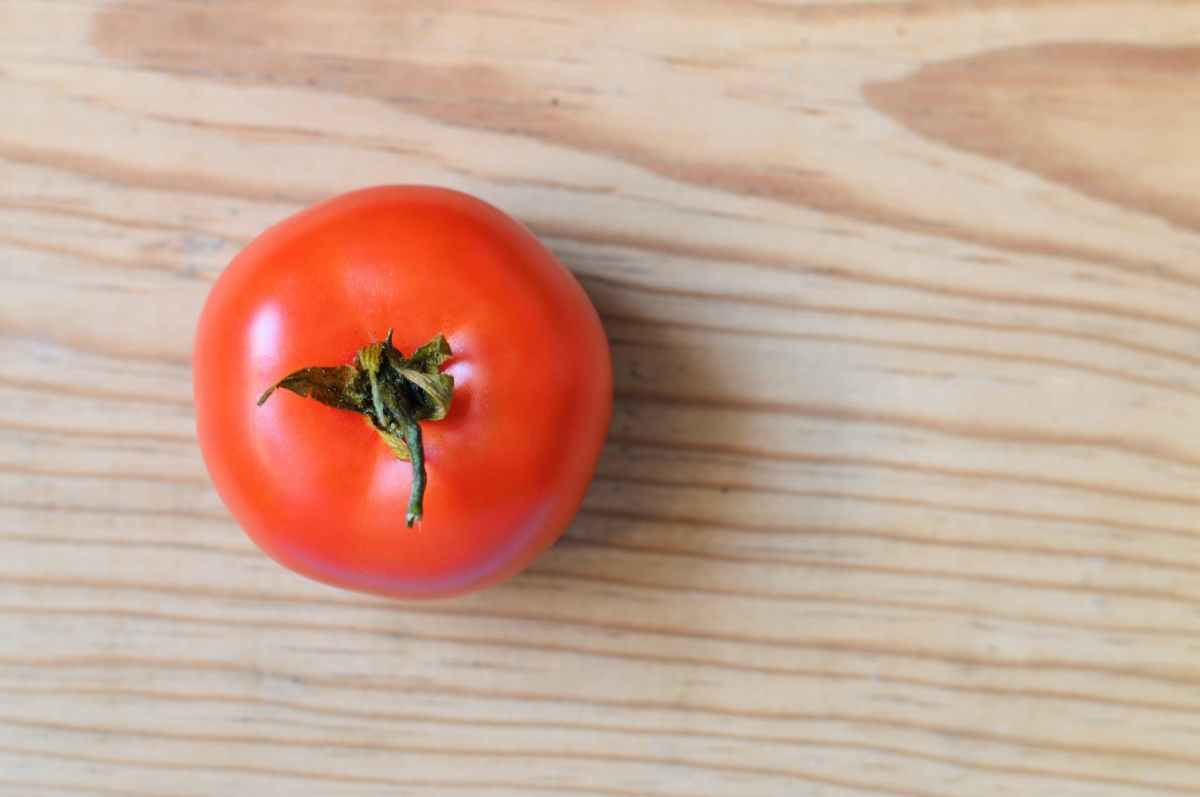
Is the tomato a fruit or a vegetable? I’m going to be writing about something important, sensitive, and personal to many of my friends. The reasons to start with tomatoes should make sense by the end.
As an obnoxious pedant I like to point out that a tomato is a fruit. According to my neighbors at the New York Botanical Garden; A fruit is a mature, ripened ovary, along with the contents of the ovary. The ovary is the ovule-bearing reproductive structure in the plant flower. The ovary serves to enclose and protect the ovules, from the youngest stages of flower development until the ovules become fertilized and turn into seeds [What Is a Fruit]. A tomato fits that definition, so it is unequivocally a fruit, or so the obnoxious pedant, emphasis on the obnoxious, might think. Why is calling a tomato a fruit equivocal? Because that’s the botanical definition of a fruit but there are others, ones that are in my common usage among people that aren’t botanists or biologists.
There is also the culinary use of vegetable; Vegetable is a culinary term. Its definition has no scientific value and is somewhat arbitrary and subjective. All parts of herbaceous plants eaten as food by humans, whole or in part, are generally considered vegetables. Mushrooms, though belonging to the biological kingdom, fungi, are are also commonly considered vegetables. Though the exceptions are many, in general, vegetables are thought of as being savoury, and not sweet. Culinary fruits, nuts, grains, herbs, and spices are all arguably the exceptions.
Since “vegetable” is not a botanical term, there is no contradiction in referring to a plant part as a fruit while also being considered a vegetable (see diagram at right). Given this general rule of thumb, vegetables can include leaves (lettuce), stems (asparagus), roots ( carrots), flowers ( broccoli), bulbs ( garlic), seeds (peas and beans) and of course the botanical fruits like cucumbers, squash, pumpkins, and capsicums.
The merits of this ongoing question, “is it a fruit, or is it a vegetable,” have even found its way before the bench of the United States Supreme Court which ruled unanimously in Nix v. Hedden, 1883, that a tomato is a vegetable even though botanically, a tomato is a fruit [Vegetable].
An obnoxious pedant might argue with a chef that a tomato is a fruit and a mushroom a fungus, but he’d lose his case in court. The answer to, “Is a tomato a fruit or a vegetable?” is, “it depends on the context in which it is being discussed. If this is disappointing to pedants you can still say, “Did you know that a banana is botanically a berry?” That is how I survived this realization. I don’t want to be obnoxious but I don’t want to give up 0n being a pedant.
Any guesses on what direction this discussion is heading? It’s obvious in my mind but I already know the answer. If you have guessed before reading on please let me know in the comments, either here or on Facebook. Don’t answer until you’ve read on and know if you are right. This is not a test. It’s just me trying to learn how other people’s minds work.
Now we are going to discuss gender. People being what they are, some of you are thinking, “I thought so but was afraid to say it.” Don’t be ashamed if that is true. Not judging how other people’s minds work is part of what I’m writing about.
I wrote about gender, specifically transgender people before and took it down because I hurt the feelings of people I care about. When I took it down I still felt that I was right. On the pedant level I still think I was right, but on the personal level I was wrong.
Let’s consider Riley (Riley is the name that is most evenly divided between males and females), a biological male who decided at the age of 23 that she was a female and was delighted that her parents had the foresight to name her Riley. Riley considers herself a transwoman and a lesbian. Riley had no surgery and so is both anatomically and genetically still a male. Biology doesn’t care what she thinks. So is she unequivocally a male? No, for the same reason that a tomato is not unequivocally a fruit. Perhaps some day the supreme court will weigh in and agree with Riley. Then Riley would be a biological male and a legal female. If the court disagrees she would be a biological and legal male yet still psychologically a woman. I was torn on how to put that. This is where my understanding has progressed since I last wrote about this. I still have no idea what it means to feel like a woman or like a man. I feel like me. The thing is that my understanding has no bearing on the matter. There are plenty of things I don’t understand that are real. My biggest baseball arguments are with people that don’t understand modern analysis and so reject it. I might not know what it feels like to be a man, I do know what it feels like to be an empiricist and that’s a lot more central to my identity than my gender.
Now let’s consider the people that are not fully accepting of trans and non-binary individuals. Don’t think of them as terrible people, think of them as people that lived their entire life ignorant of botany, as are most people, and accept without thinking that a tomato is a vegetable and so find calling a tomato a fruit absurd. There are plenty of people like that. They think that only pedants think otherwise and that there is no need to preface the term with “obnoxious.” It goes without saying. They rail against the elites who look down on them. Explaining that the biological definition is not as clear cut as it sound as there are rare exceptions, misses the entire point. It’s not that the notion of botanical fruit is not well-defined, it’s that we are talking about something from a totally different viewpoint.
To me the fact that Riley is a person that has feelings that I don’t want to hurt and a tomato isn’t, is true and important, but not relevant to the argument. That’s why I started with tomatoes, something without the emotional import of gender.
 Wise Madness